A Quiet Room-by-Room Energy Observation
A room-by-room energy observation helps you see what household devices do during an ordinary afternoon, without tools, measurements, or equipment changes.
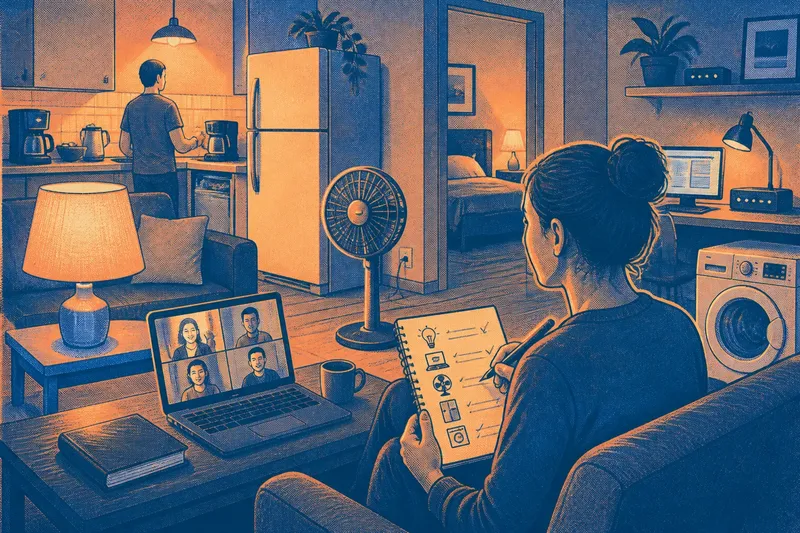
A room-by-room energy observation makes the electricity in an ordinary afternoon easier to notice: look at what is already running, then sort each device by the task it serves. You do not need to touch a switch, check a meter, or change anyone’s routine. The useful part is simply noticing how many different jobs household electricity supports.
Choose a relaxed afternoon when you expect to be indoors for a while. Walk through the rooms at an unhurried pace, or sit in one place and make observations as you move through your normal activities. Treat the exercise like looking at a kitchen counter: the objects are familiar, but grouping them by purpose can reveal a pattern you might otherwise overlook.
A Gentle Observation
Keep the activity observational. Notice what is visibly operating or being used, and leave switches, plugs, controls, and appliance settings alone. There is no need to inspect cords, reach behind furniture, open equipment, or find out what is happening inside a device.
Use ordinary clues. A lamp may be lit; a laptop may be open for work; a refrigerator may be closed between visits; a fan may be moving air. Some devices make their task obvious, while others offer only a small sign of activity, such as a screen that is on or a status light that is visible from where you are.
Not every device in a room needs to be counted. Focus on items you can identify without disturbing anything. If you cannot tell whether an appliance is running, leave it out rather than guessing. A careful note of what you can see is more useful than a confident claim about what you cannot.
Tasks Behind Devices
Sort observations by the job the device performs, not by its brand, size, or location. A basic set of task groups could include:
- Seeing: lamps and other lighting used to make a space easier to see.
- Communicating or computing: phones in use, computers, routers, and screens supporting a conversation, task, or connection.
- Comfort: fans or other visible equipment used to affect how a room feels.
- Preserving or preparing food: refrigerators, freezers, or kitchen appliances that are visibly in use.
- Cleaning or care: a vacuum, washer, or personal-care appliance operating during the observation.
- Entertainment: televisions, speakers, or game equipment being used for leisure.
These are convenient labels, not strict categories. A laptop can support work, entertainment, or a video call; write down the task that seems to fit what is happening at that moment. If the purpose is unclear, use a neutral note such as “screen on” instead of assigning a use you have not observed.
It can also help to distinguish a device that is actively serving someone from one that appears to be running in the background. A person reading from a laptop is a clear activity. A router’s visible status light may suggest that the device is on, but it does not tell you which household member is using the connection. Record the observation, not an assumption about unseen activity.
Notes By Room
Move through familiar rooms and record just enough detail to remember what you saw. You might make a few short notes on paper, or keep the observations in mind and sort them afterward. No special form is needed, and the notes do not need to include every object.
- Living room: note visible lighting, a television or speaker in use, and any device supporting a current activity.
- Kitchen: observe appliances that are visibly operating or being used, without opening a refrigerator or touching controls to check.
- Bedroom: notice a reading lamp, a screen in use, or other equipment serving an activity you can see.
- Workspace: record computers, monitors, or task lighting that are visibly supporting work or communication.
- Hallway or shared area: include lighting or other equipment only if its activity is apparent from where you stand.
Room labels give the notes a sense of place, but a task label helps you compare what the devices are doing. You may notice that one room supports several kinds of activity, while another has only a single visible device in use. That is a description of this afternoon, not a verdict about how the household should operate.
Imagine you are sitting in a living room on a cloudy afternoon. You can see a lamp on beside a book, a laptop open during a video call, and a fan running nearby; you write “seeing,” “communicating,” and “comfort” beside those observations, then leave each device as it was. The result is a small record of different tasks sharing one room, not a measurement of how much electricity any of them uses.
What Can You Notice?
Should I include devices on standby?
Include one only when you can observe a clear sign that it is on, such as a visible status light, and describe that sign rather than guessing what the device is doing. An item that merely looks plugged in is not enough to establish its current activity.
Can I estimate which device uses more electricity?
Not from this observation alone. A device’s appearance or task does not establish its energy use, so keep the notes focused on visible activity rather than ranking appliances.
What if a device has more than one purpose?
Choose the task it is serving at that moment, or note two tasks if both are plainly part of the activity. A screen used for a video call, for example, can support both computing and communication.
Should I change anything I notice?
No change is needed for this activity. Leave equipment and household routines as they are, and treat any later decision as separate from the observation.
Useful Boundaries
A short observation cannot reveal a device’s exact energy use, how long it has been operating, or what is happening inside it. It also cannot explain why someone chose to use an appliance. Those questions need information beyond a quiet look around the room.
Keep people’s privacy in mind, especially in shared homes. Do not inspect personal devices, read messages, or record who is using a screen. The point is to notice household tasks, not to keep a record of another person’s behavior.
Likewise, avoid turning the activity into an inspection. Do not move furniture to see a plug, handle a warm appliance, or look inside a machine. If you notice something that raises a genuine safety concern, stop observing and follow appropriate household guidance; a qualified professional is the right person for equipment questions that need technical judgment.
Close With One Pattern
At the end of the afternoon, review the task groups rather than trying to draw a lesson from every device. Ask which kinds of tasks were visible in more than one room, which activities were concentrated in one place, and which observations remained uncertain. A quiet room-by-room energy observation is most useful when it leaves you with a clearer picture of household activity, while keeping visible facts separate from guesses about energy use.
If you repeat the observation another afternoon, use the same simple categories but let the day differ. A room may serve another purpose, a device may be absent, or an activity may happen elsewhere. That variation is worth noticing on its own; there is no need to measure, compare totals, or change equipment to make the exercise complete.